


.png)
Concordium Pay delivers instant stablecoin payments cutting fees by up to 3% and ending settlement delays.
With a combined transaction value estimated at $15 trillion in 2025, Google Pay and Apple Pay have dominated the market for fast, reliable payments. They're everywhere: metros, petrol pumps, online checkouts. Built into most mobile devices, their tap-to-pay, low friction solution has made them the standard.
But this convenience comes with hidden costs. Control over these transactions rests mostly with Apple and Google, creating a single point of failure. When centralized infrastructure goes down, millions of users are affected simultaneously. Meanwhile, merchants especially Small & Medium businesses face their own burden: paying additional fees to payment providers to be able to access these platforms, or being able to use their earnings for their business growth due to cooldown period rules.
Concordium Pay offers a different approach. It leverages the efficiency and reliability of stablecoins to deliver mainstream payment functionality while preserving user privacy, and significantly reducing costs for merchants.
Solving the Payment Duopoly
Concordium Pay takes away the control that defines today's digital payment landscape. Unlike Apple Pay and Google Pay, where infrastructure failure means system-wide outages, Concordium operates on a decentralized network with no single point of failure, reducing the risk significantly. Users maintain control over their payments and their identity independent of corporate gatekeepers.
By eliminating intermediary fees by circumventing platforms like Stripe, merchants aren’t hit with the traditional payment processors costs. Transactions get settled in seconds rather than days and weeks, with low and predictable fees for merchants enabled by native stablecoin integration.
Users buying with Concordium Pay have their identity connected to their wallet. This bridges the gap between crypto innovation and traditional finance, enabling user privacy, ensuring legitimate commerce and meeting auditability standards that regulators demand.
How Concordium Pay Works?
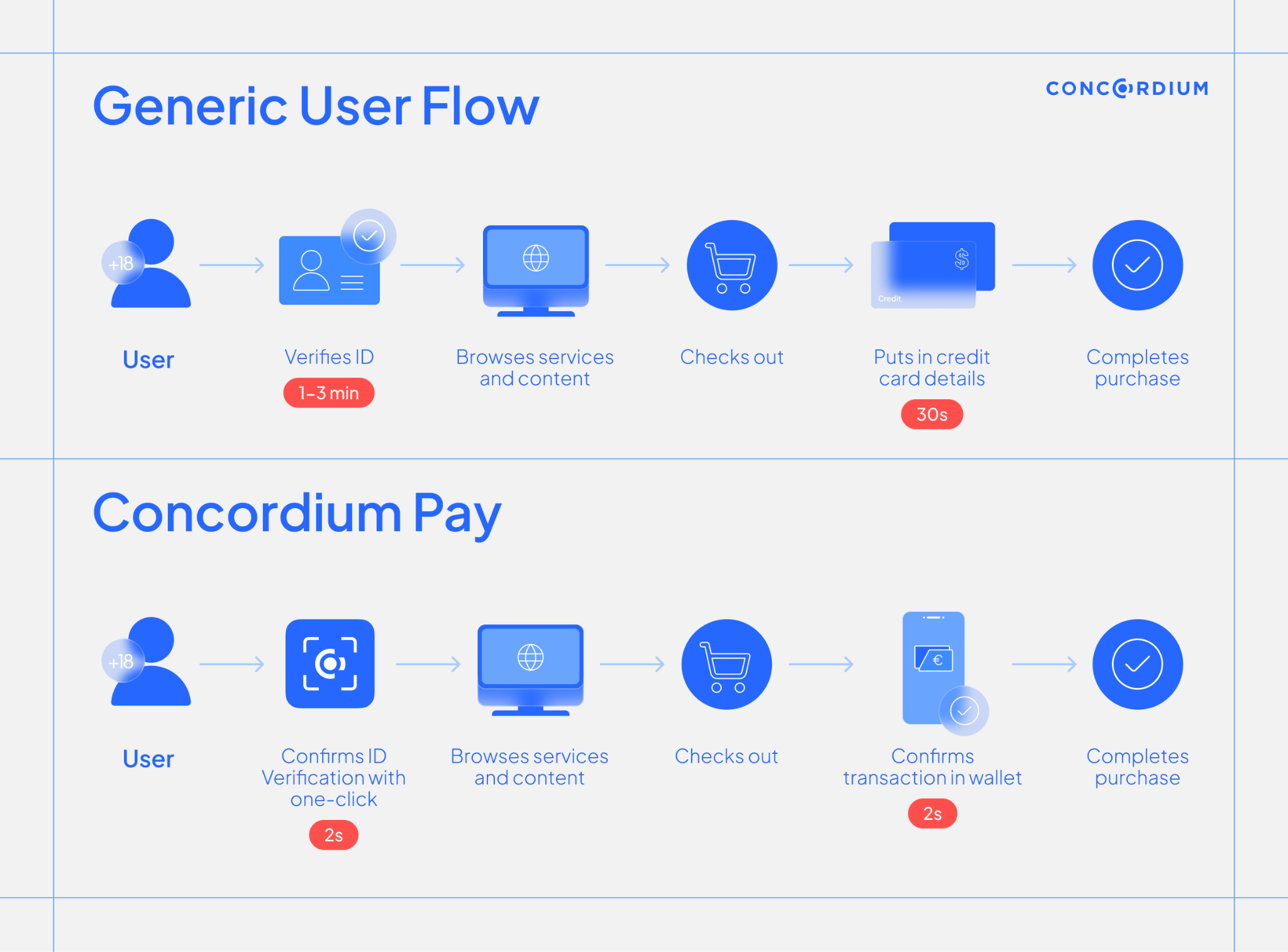
Concordium Pay also lets merchants enforce rules like age- or geo-gating allowing verified and compliant settlements in stablecoins in a single step, without revealing user identity.
For example, an online wine merchant can verify that a buyer meets the legal age requirement and is located in an approved jurisdiction. The buyer completes checkout without uploading documents or waiting for manual review, and the payment settles instantly using a stablecoin.
Concordium Pay in Use
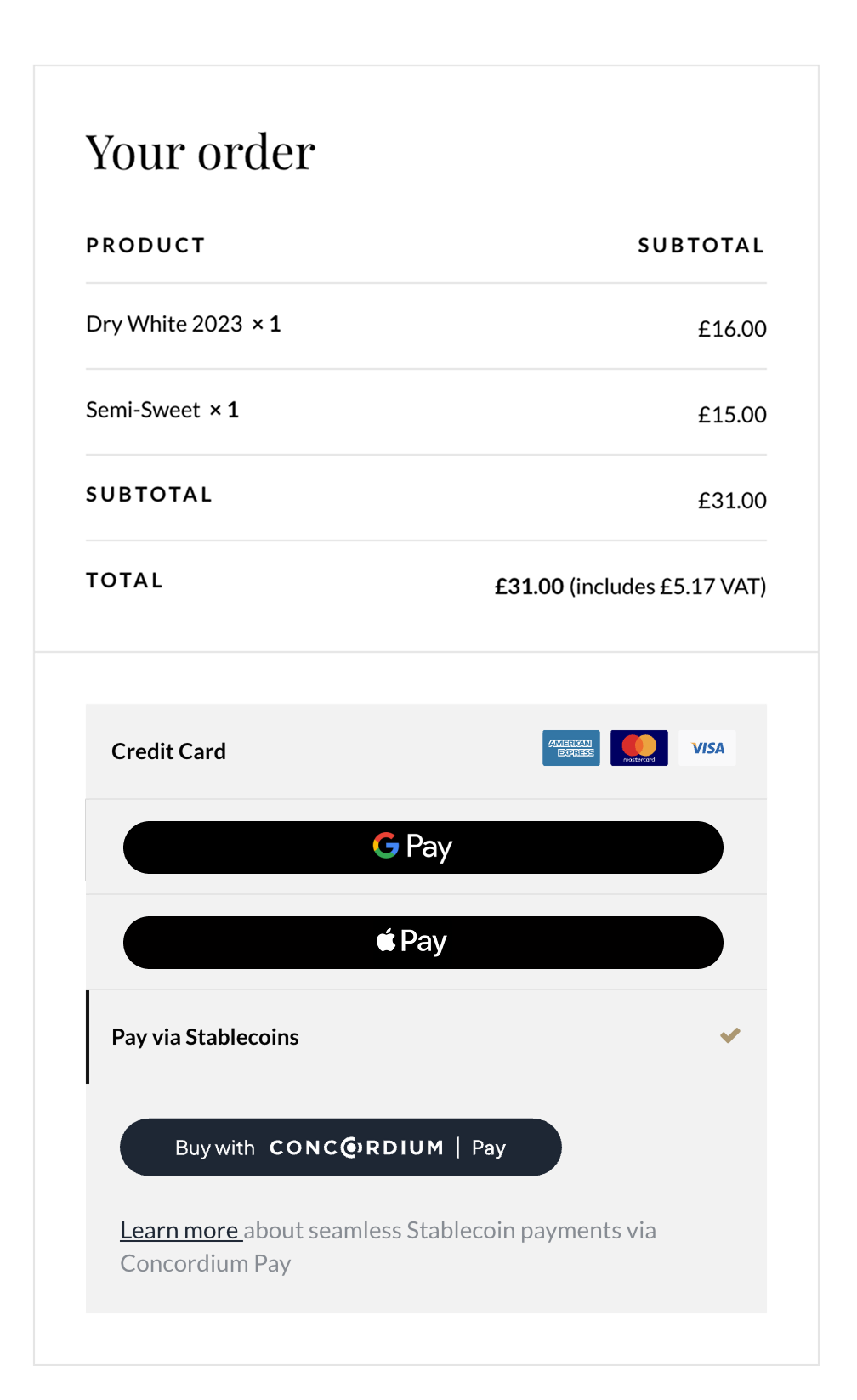
Through native integrations with Bitcoin.com and Ledger, millions of users will be able to use Concordium Pay in their day-to-day online transactions soon. By verifying their ID once during wallet setup, they will gain access to thousands of merchants supporting compliance-ready stablecoin payments flows.
Merchants, on the other hand, will get access to a variety of integration options like WooCommerce or Shopify plugins, making it even easier to build a decentralised alternative to the current online payment market.
The Current State
Concordium Pay enables stablecoins from niche usage into everyday payments. It is an answer to the duopoly that Google and Apple have.
For users, it enables control over their data. Stablecoins can be spent like digital cash, while identity remains in the wallet and is shared only when required.
For merchants, it lowers processing costs, settles transactions instantly, and removes friction from accepting stablecoin payments. Auditability is built in by default, without storing customer data.
For regulators, Concordium Pay provides what has been missing from many crypto payment systems: accountability. Protocol-level identity verification and selective disclosure support auditability requirements while preserving user privacy.
As digital payments evolve, Concordium Pay demonstrates how stablecoins can scale beyond crypto-native users, rival Apple Pay and Google Pay, and operate within real-world financial frameworks.